
Skip to content
NGTEdu Logo

NGTEdu

A PRODUCT OF NGTECH.CO.IN

NGTEdu Logo

NGTEdu

  • Home
  • Cyber Attacks
  • Malware
  • Vulnerabilities
  • Data Breach
  • Home
  • Cyber Attacks
  • US charges North Koreans in relation to global cyber attacks
  • Cyber Attacks
  • Data Breach
  • Malware

US charges North Koreans in relation to global cyber attacks
5 years ago Graham Cluley
US charges North Koreans in relation to global cyber attacks

The United States Department of Justice has charged three North Korean computer programmers with a range of cyber attacks that made headlines around the world.

The men – 31-year-old Jon Chang Hyok, Kim Il, 27, and 36-year-old Park Jin Hyok – are alleged to have been part of North Korea’s Reconnaissance General Bureau (RGB), known commonly as the “Lazarus Group” or “APT38”, tasked with criminal hacking operations.

And – according to the DOJ – the men undertook a number of criminal cyber attacks at the behest of the North Korean regime, including:

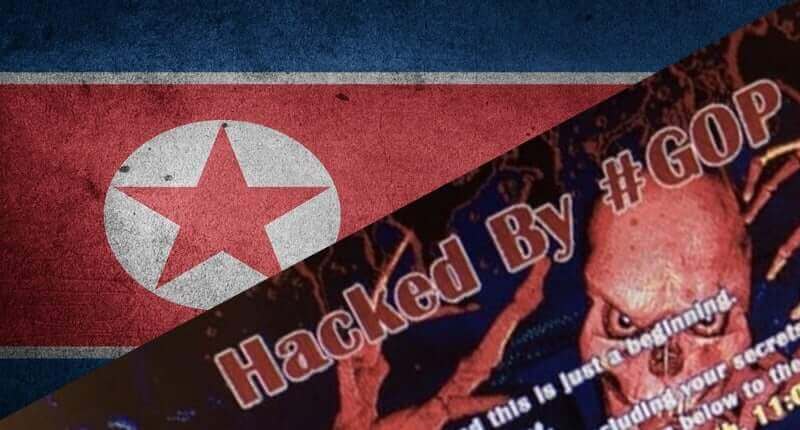
  • The 2014 “Guardians of the Peace” hack of Sony Pictures, seemingly in retaliation to the production of “The Interview,” a comedy that depicted a CIA plot to assassinate North Korean leader Kim Jong-Un.
  • The 2017 WannaCry ransomware attack, which hit the UK’s National Health Service hard, as well as other ransomware attacks in the years since.
  • The creation and distribution of malicious cryptocurrency trading and wallet apps, that provided North Korean hackers with a way to infiltrate victims’ devices.
  • The theft of millions of dollars worth of cryptocurrency from hacked exchanges and financial services companies.
  • Spearphishing attacks against targeted employees of United States energy companies, aerospace companies, technology companies, the US Department of State, and the Department of Defense.
  • Attempts to steal more than $1.2 billion from banks in Vietnam, Bangladesh, Taiwan, Mexico, Malta, and Africa by infiltrating their networks and sending fraudulent messages via the SWIFT banking system.

The DOJ claims that although the men were working for North Korea, they were sometimes stationed in other counties, including Russia and China.

In addition to unsealing the charges against the three men, the FBI, US Department of Treasury, and Department of Homeland Security have issued a security advisory regarding a family of North Korean malware known as AppleJeus that poses as a variety of different cryptocurrency trading applications.

“North Korea has used AppleJeus malware posing as cryptocurrency trading platforms since at least 2018. In most instances, the malicious application — seen on both Windows and Mac operating systems — appears to be from a legitimate cryptocurrency trading company, thus fooling individuals into downloading it as a third-party application from a website that seems legitimate.

The advisory goes on to explain that the attackers also use phishing, social networking, and social engineering attacks to trick users into downloading the malware.

The malicious cryptocurrency trading apps have names such as Celas Trade Pro, WorldBit-Bot, Union Crypto Trader, Kupay Wallet, CoinGo Trade, Dorusio, CryptoNeuro Trader, and Ants2Whale, although obviously it would be trivial for them to adopt new disguises.

Jon, Kim, and Park are charged by the Department of Justice with one count of conspiracy to commit computer fraud and abuse, which carries a maximum sentence of five years in prison, and one count of conspiracy to commit wire fraud and bank fraud, which carries a maximum sentence of 30 years in prison.

Of course, as all three men are believed to work for the North Korean military it seems unlikely that they will ever have their day in court in America.


Editor’s Note: The opinions expressed in this guest author article are solely those of the contributor, and do not necessarily reflect those of Tripwire, Inc.

The post ” US charges North Koreans in relation to global cyber attacks” appeared first on TripWire

Source:TripWire – Graham Cluley

Tags: CERT, Finance, Goverment, Malware, Phishing, Ransomware, TripWire

Continue Reading

Previous SDK Bug Lets Attackers Spy on User’s Video Calls Across Dating, Healthcare Apps
Next Mac Malware Targets Apple’s In-House M1 Processor

More Stories

  • Cyber Attacks
  • Data Breach
  • Malware

OFAC Sanctions DPRK IT Worker Network Funding WMD Programs Through Fake Remote Jobs

2 hours ago [email protected] (The Hacker News)
  • Critical Vulnerability
  • Cyber Attacks
  • Data Breach
  • Malware
  • Vulnerabilities

Interlock Ransomware Exploits Cisco FMC Zero-Day CVE-2026-20131 for Root Access

3 hours ago [email protected] (The Hacker News)
  • Critical Vulnerability
  • Cyber Attacks
  • Data Breach
  • Vulnerabilities

Claude Code Security and Magecart: Getting the Threat Model Right

7 hours ago [email protected] (The Hacker News)
  • Critical Vulnerability
  • Data Breach
  • Vulnerabilities

9 Critical IP KVM Flaws Enable Unauthenticated Root Access Across Four Vendors

7 hours ago [email protected] (The Hacker News)
  • Cyber Attacks
  • Data Breach
  • Vulnerabilities

Product Walkthrough: How Mesh CSMA Reveals and Breaks Attack Paths to Crown Jewels

9 hours ago [email protected] (The Hacker News)
  • Critical Vulnerability
  • Cyber Attacks
  • Data Breach
  • Vulnerabilities

Ubuntu CVE-2026-3888 Bug Lets Attackers Gain Root via systemd Cleanup Timing Exploit

11 hours ago [email protected] (The Hacker News)

Recent Posts

  • OFAC Sanctions DPRK IT Worker Network Funding WMD Programs Through Fake Remote Jobs
  • Interlock Ransomware Exploits Cisco FMC Zero-Day CVE-2026-20131 for Root Access
  • Claude Code Security and Magecart: Getting the Threat Model Right
  • 9 Critical IP KVM Flaws Enable Unauthenticated Root Access Across Four Vendors
  • Product Walkthrough: How Mesh CSMA Reveals and Breaks Attack Paths to Crown Jewels

Tags

Android APT Bug CERT Cloud Compliance Coronavirus COVID-19 Critical Severity Encryption Exploit Facebook Finance Google Google Chrome Goverment Hacker Hacker News High Severity Instagram iPhone Java Linux Low Severity Malware Medium Severity Microsoft Moderate Severity Mozzila Firefox Oracle Patch Tuesday Phishing Privacy QuickHeal Ransomware RAT Sim The Hacker News Threatpost TikTok TripWire VMWARE Vulnerability Whatsapp Zoom
Copyright © 2020 All rights reserved | NGTEdu.com
This website uses cookies to improve your experience. We'll assume you're ok with this, but you can opt-out if you wish. Read More here.Cookie settingsACCEPT
Privacy & Cookies Policy

Privacy Overview

This website uses cookies to improve your experience while you navigate through the website. Out of these cookies, the cookies that are categorized as necessary are stored on your browser as they are essential for the working of basic functionalities of the website. We also use third-party cookies that help us analyze and understand how you use this website. These cookies will be stored in your browser only with your consent. You also have the option to opt-out of these cookies. But opting out of some of these cookies may have an effect on your browsing experience.
Necessary
Always Enabled
Necessary cookies are absolutely essential for the website to function properly. This category only includes cookies that ensures basic functionalities and security features of the website. These cookies do not store any personal information.
Non-necessary
Any cookies that may not be particularly necessary for the website to function and is used specifically to collect user personal data via analytics, ads, other embedded contents are termed as non-necessary cookies. It is mandatory to procure user consent prior to running these cookies on your website.
SAVE & ACCEPT