
Skip to content
NGTEdu Logo

NGTEdu

A PRODUCT OF NGTECH.CO.IN

NGTEdu Logo

NGTEdu

  • Home
  • Cyber Attacks
  • Malware
  • Vulnerabilities
  • Data Breach
  • Home
  • Cyber Attacks
  • Multi-Platform Malware Framework ‘MATA’ Claimed Victims Worldwide
  • Cyber Attacks
  • Data Breach
  • Malware

Multi-Platform Malware Framework ‘MATA’ Claimed Victims Worldwide

6 years ago David Bisson
Multi-Platform Malware Framework ‘MATA’ Claimed Victims Worldwide

Security researchers discovered a multi-platform malware framework called “MATA” that had succeeded in targeting victims worldwide.

On Securelist, Kaspersky Lab revealed that it had shared its discovery of MATA with its Threat Intelligence Portal customers.

The Russian security firm explained in its analysis that the first artifacts pertaining to MATA emerged back in April 2018. Whoever’s behind the malware framework then used the threat to target enterprises in Poland, Germany, Turkey, Korea, Japan and India.

The targeted organizations operated in several different economic sectors. Among the victims were a software company, an e-commerce business and an Internet Service Provider (ISP).

In these campaigns, the actors responsible for MATA demonstrated that they held various intentions for attacking their victims. With one organization, for instance, the malicious actors used the framework to query the victim’s databases for the sake of acquiring customer lists. With another victim, they used their threat to distribute VHD ransomware.

Kaspersky Lab came across three versions of MATA that targeted either Windows, Linux and macOS.

The Windows version consisted of several components including a loader malware and an orchestrator element. Using a hardcoded hex-string, the loader invoked an encrypted payload. This action paved the way for the orchestrator to load plugin files and execute them from memory. Those plugins gave attackers the ability to manipulate files, create an HTTP proxy server and perform other tasks.

The Linux version of MATA was available on a legitimate distribution site, while the macOS variant arrived as a trojanized two-factor authentication (2FA) application.
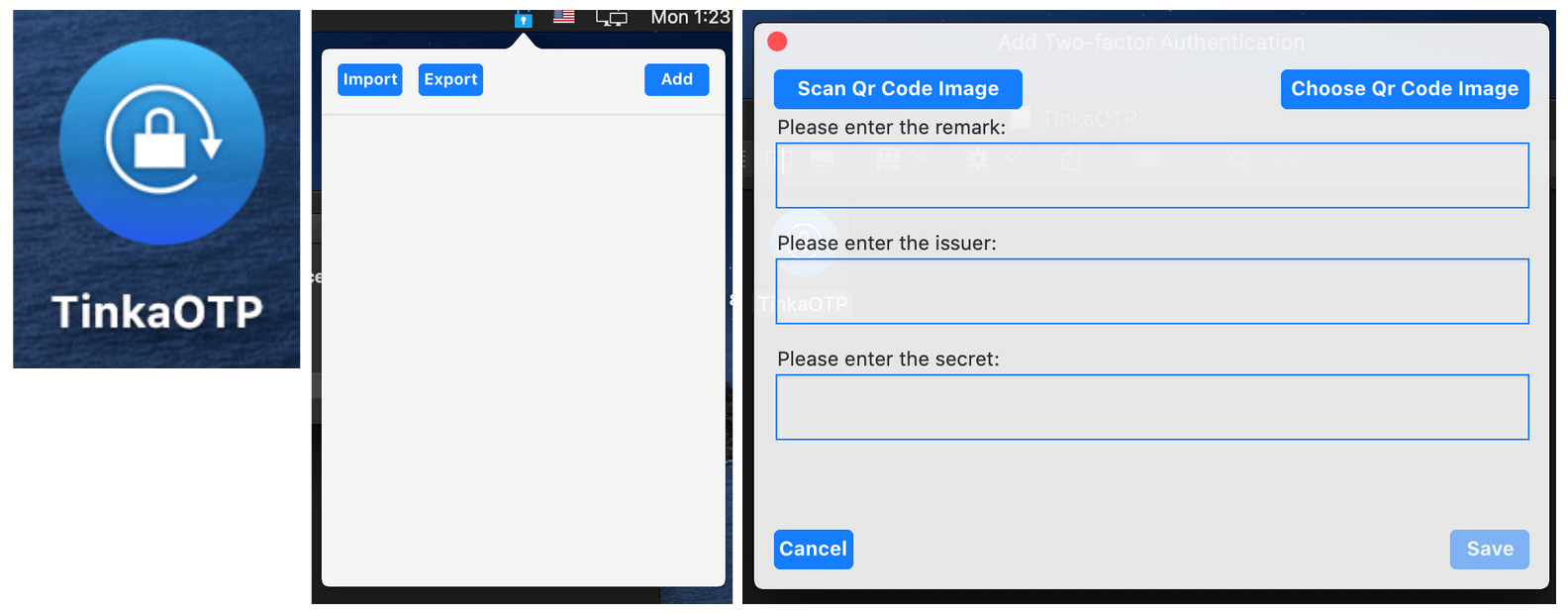
Trojanized macOS application (Source: Kaspersky Lab)

In its analysis, Kaspersky Lab attributed the malware platform to a well-known threat actor:

We assess that the MATA framework is linked to the Lazarus APT group. The MATA orchestrator uses two unique filenames, c_2910.cls and k_3872.cls, which have only previously been seen in several Manuscrypt variants, including the samples (0137f688436c468d43b3e50878ec1a1f) mentioned in the US-CERT publication.

The security firm revealed that a variant of Manuscrypt, a malware family distributed by Lazarus, also shared a similar configuration structure with MATA.

Kaspersky Lab said it would continue to monitor the malware platform as it evolves.

The post ” Multi-Platform Malware Framework ‘MATA’ Claimed Victims Worldwide” appeared first on TripWire

Source:TripWire – David Bisson

Tags: APT, CERT, Encryption, Goverment, Linux, Malware, Ransomware, TripWire

Continue Reading

Previous US Charges 2 Chinese Hackers for Targeting COVID-19 Research and Trade Secrets
Next Leak Exposes Private Data of Genealogy Service Users

More Stories

  • Cyber Attacks
  • Data Breach
  • Malware

OFAC Sanctions DPRK IT Worker Network Funding WMD Programs Through Fake Remote Jobs

9 hours ago [email protected] (The Hacker News)
  • Critical Vulnerability
  • Cyber Attacks
  • Data Breach
  • Malware
  • Vulnerabilities

Interlock Ransomware Exploits Cisco FMC Zero-Day CVE-2026-20131 for Root Access

10 hours ago [email protected] (The Hacker News)
  • Critical Vulnerability
  • Cyber Attacks
  • Data Breach
  • Vulnerabilities

Claude Code Security and Magecart: Getting the Threat Model Right

14 hours ago [email protected] (The Hacker News)
  • Critical Vulnerability
  • Data Breach
  • Vulnerabilities

9 Critical IP KVM Flaws Enable Unauthenticated Root Access Across Four Vendors

15 hours ago [email protected] (The Hacker News)
  • Cyber Attacks
  • Data Breach
  • Vulnerabilities

Product Walkthrough: How Mesh CSMA Reveals and Breaks Attack Paths to Crown Jewels

16 hours ago [email protected] (The Hacker News)
  • Critical Vulnerability
  • Cyber Attacks
  • Data Breach
  • Vulnerabilities

Ubuntu CVE-2026-3888 Bug Lets Attackers Gain Root via systemd Cleanup Timing Exploit

18 hours ago [email protected] (The Hacker News)

Recent Posts

  • OFAC Sanctions DPRK IT Worker Network Funding WMD Programs Through Fake Remote Jobs
  • Interlock Ransomware Exploits Cisco FMC Zero-Day CVE-2026-20131 for Root Access
  • Claude Code Security and Magecart: Getting the Threat Model Right
  • 9 Critical IP KVM Flaws Enable Unauthenticated Root Access Across Four Vendors
  • Product Walkthrough: How Mesh CSMA Reveals and Breaks Attack Paths to Crown Jewels

Tags

Android APT Bug CERT Cloud Compliance Coronavirus COVID-19 Critical Severity Encryption Exploit Facebook Finance Google Google Chrome Goverment Hacker Hacker News High Severity Instagram iPhone Java Linux Low Severity Malware Medium Severity Microsoft Moderate Severity Mozzila Firefox Oracle Patch Tuesday Phishing Privacy QuickHeal Ransomware RAT Sim The Hacker News Threatpost TikTok TripWire VMWARE Vulnerability Whatsapp Zoom
Copyright © 2020 All rights reserved | NGTEdu.com
This website uses cookies to improve your experience. We'll assume you're ok with this, but you can opt-out if you wish. Read More here.Cookie settingsACCEPT
Privacy & Cookies Policy

Privacy Overview

This website uses cookies to improve your experience while you navigate through the website. Out of these cookies, the cookies that are categorized as necessary are stored on your browser as they are essential for the working of basic functionalities of the website. We also use third-party cookies that help us analyze and understand how you use this website. These cookies will be stored in your browser only with your consent. You also have the option to opt-out of these cookies. But opting out of some of these cookies may have an effect on your browsing experience.
Necessary
Always Enabled
Necessary cookies are absolutely essential for the website to function properly. This category only includes cookies that ensures basic functionalities and security features of the website. These cookies do not store any personal information.
Non-necessary
Any cookies that may not be particularly necessary for the website to function and is used specifically to collect user personal data via analytics, ads, other embedded contents are termed as non-necessary cookies. It is mandatory to procure user consent prior to running these cookies on your website.
SAVE & ACCEPT