
Skip to content
NGTEdu Logo

NGTEdu

A PRODUCT OF NGTECH.CO.IN

NGTEdu Logo

NGTEdu

  • Home
  • Cyber Attacks
  • Malware
  • Vulnerabilities
  • Data Breach
  • Home
  • Cyber Attacks
  • Lucifer Malware Abused Windows Exploits for Cryptomining, DDoS Attacks
  • Cyber Attacks
  • Data Breach
  • Malware
  • Vulnerabilities

Lucifer Malware Abused Windows Exploits for Cryptomining, DDoS Attacks

6 years ago David Bisson
Lucifer Malware Abused Windows Exploits for Cryptomining, DDoS Attacks

New malware called “Lucifer” came with numerous exploits for conducting cryptomining functionality and performing distributed denial-of-service (DDoS) attacks on infected Windows machines.

Palo Alto Networks’ Unit 42 research team identified two versions of Lucifer in their research. (Both variants bore the name “Satan DDoS,” but for the sake of not confusing this threat with the Satan Ransomware-as-a-Service (RaaS) platform, Unit 42 decided to call the malware “Lucifer.”)

The first version of the malware acted upon successful execution by decrypting its command-and-control (C&C) IP address and using that information to create a mutant object. It then leveraged registry keys and scheduled tasks to establish persistence before reviewing whether any other cryptomining data was stored in a registry key. At that point, Lucifer enabled the debug privilege and used several threads to deploy its cryptomining binary.

Lucifer arrived with several propagation methods. Unit 42 witnessed the malware leveraging brute force techniques in the event that it spotted TCP port 1433 open on a target, for instance. The threat also arrived with the ability to abuse several well-known exploits, as the researchers explained in a blog post:

In addition to brute-forcing the credentials, the malware leverages exploitation for self-propagation. For intranet infection, it drops and runs EternalBlue, EternalRomance, and DoublePulsar backdoor against the target when the target has TCP port 445 (SMB) open. Upon successful exploitation, certutil is used to propagate the malware.

After launching its worker threads, Lucifer launched into infinite loop so as to remain in contact with its C&C server. This connected enabled the malware to receive instructions for the purpose of managing its miner’s functionality and for conducting a DDoS attack.
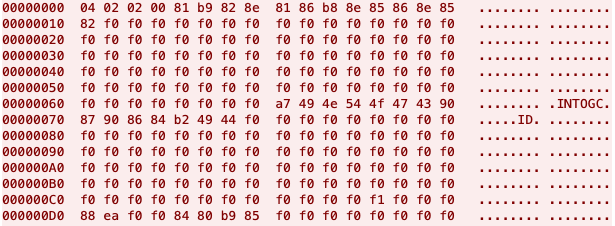
Initial request to C2 server (Source: Palo Alto Networks)

The second version of Lucifer wasn’t too dissimilar from the first variant spotted by Unit 42. However, it did stand out for the addition of anti-sandbox capabilities and an anti-debugger technique along with changes made to the list of exploits included in its arsenal.

Both variants of Lucifer highlight the need for organizations to ensure that their systems are up-to-date wherever possible. They can do this by creating a robust vulnerability management program. Some best practices for doing so are available here.

The post ” Lucifer Malware Abused Windows Exploits for Cryptomining, DDoS Attacks” appeared first on TripWire

Source:TripWire – David Bisson

Tags: Encryption, Malware, Ransomware, TripWire

Continue Reading

Previous Office 365 Users Targeted By ‘Coronavirus Employee Training’ Phish
Next Find a PlayStation 4 vulnerability and earn over $50,000

More Stories

  • Cyber Attacks
  • Data Breach

Iran-Linked Hackers Breach FBI Director’s Personal Email, Hit Stryker With Wiper Attack

7 hours ago [email protected] (The Hacker News)
  • Critical Vulnerability
  • Vulnerabilities

Citrix NetScaler Under Active Recon for CVE-2026-3055 (CVSS 9.3) Memory Overread Bug

14 hours ago [email protected] (The Hacker News)
  • Critical Vulnerability
  • Cyber Attacks
  • Vulnerabilities

CISA Adds CVE-2025-53521 to KEV After Active F5 BIG-IP APM Exploitation

16 hours ago [email protected] (The Hacker News)
  • Vulnerabilities

TA446 Deploys DarkSword iOS Exploit Kit in Targeted Spear-Phishing Campaign

16 hours ago [email protected] (The Hacker News)
  • Critical Vulnerability
  • Cyber Attacks

Apple Sends Lock Screen Alerts to Outdated iPhones Over Active Web-Based Exploits

1 day ago [email protected] (The Hacker News)
  • Cyber Attacks
  • Data Breach

TeamPCP Pushes Malicious Telnyx Versions to PyPI, Hides Stealer in WAV Files

1 day ago [email protected] (The Hacker News)

Recent Posts

  • Iran-Linked Hackers Breach FBI Director’s Personal Email, Hit Stryker With Wiper Attack
  • Citrix NetScaler Under Active Recon for CVE-2026-3055 (CVSS 9.3) Memory Overread Bug
  • TA446 Deploys DarkSword iOS Exploit Kit in Targeted Spear-Phishing Campaign
  • CISA Adds CVE-2025-53521 to KEV After Active F5 BIG-IP APM Exploitation
  • Apple Sends Lock Screen Alerts to Outdated iPhones Over Active Web-Based Exploits

Tags

Android APT Bug CERT Cloud Compliance Coronavirus COVID-19 Critical Severity Encryption Exploit Facebook Finance Google Google Chrome Goverment Hacker Hacker News High Severity Instagram iPhone Java Linux Low Severity Malware Medium Severity Microsoft Moderate Severity Mozzila Firefox Oracle Patch Tuesday Phishing Privacy QuickHeal Ransomware RAT Sim The Hacker News Threatpost TikTok TripWire VMWARE Vulnerability Whatsapp Zoom
Copyright © 2020 All rights reserved | NGTEdu.com
This website uses cookies to improve your experience. We'll assume you're ok with this, but you can opt-out if you wish. Read More here.Cookie settingsACCEPT
Privacy & Cookies Policy

Privacy Overview

This website uses cookies to improve your experience while you navigate through the website. Out of these cookies, the cookies that are categorized as necessary are stored on your browser as they are essential for the working of basic functionalities of the website. We also use third-party cookies that help us analyze and understand how you use this website. These cookies will be stored in your browser only with your consent. You also have the option to opt-out of these cookies. But opting out of some of these cookies may have an effect on your browsing experience.
Necessary
Always Enabled
Necessary cookies are absolutely essential for the website to function properly. This category only includes cookies that ensures basic functionalities and security features of the website. These cookies do not store any personal information.
Non-necessary
Any cookies that may not be particularly necessary for the website to function and is used specifically to collect user personal data via analytics, ads, other embedded contents are termed as non-necessary cookies. It is mandatory to procure user consent prior to running these cookies on your website.
SAVE & ACCEPT