
Skip to content
NGTEdu Logo

NGTEdu

A PRODUCT OF NGTECH.CO.IN

NGTEdu Logo

NGTEdu

  • Home
  • Cyber Attacks
  • Malware
  • Vulnerabilities
  • Data Breach
  • Home
  • Cyber Attacks
  • JavaScript Used by Phishing Page to Steal Magento Credentials
  • Cyber Attacks
  • Data Breach

JavaScript Used by Phishing Page to Steal Magento Credentials

5 years ago David Bisson
JavaScript Used by Phishing Page to Steal Magento Credentials

Digital attackers created a Magento phishing page that used JavaScript to exfiltrate the login credentials of its victims.

Sucuri came across a compromised website using the filename “wp-order.php” during an investigation.

This phishing page hosted what appeared to be a legitimate Magento 1.x login portal at the time of discovery. In support of this ruse, it loaded its CSS code and images from the malicious domain orderline[.]club.

In its analysis of the website, Sucuri found that the Magento phishing page was a bit unconventional in the method by which it exfiltrated its victims’ stolen data. As quoted in its research:

… [T]he phishing page uses a technique that doesn’t require a separate PHP file or rely on PHP functions to send out an email to the attacker, which is what we often find for exfiltration on phishing pages like this.

Instead, this phishing attack uses a JavaScript EventListener method (addEventListener) with the change event for the username and login (password) fields…

The phishing page specifically sent out a GET request to orderline[.]club/fget.php in order to pass its victims’ data to the attackers.

Provided below is an illustration of this delivery mechanism at work and its application of base64 encoding to the exfiltrated information.
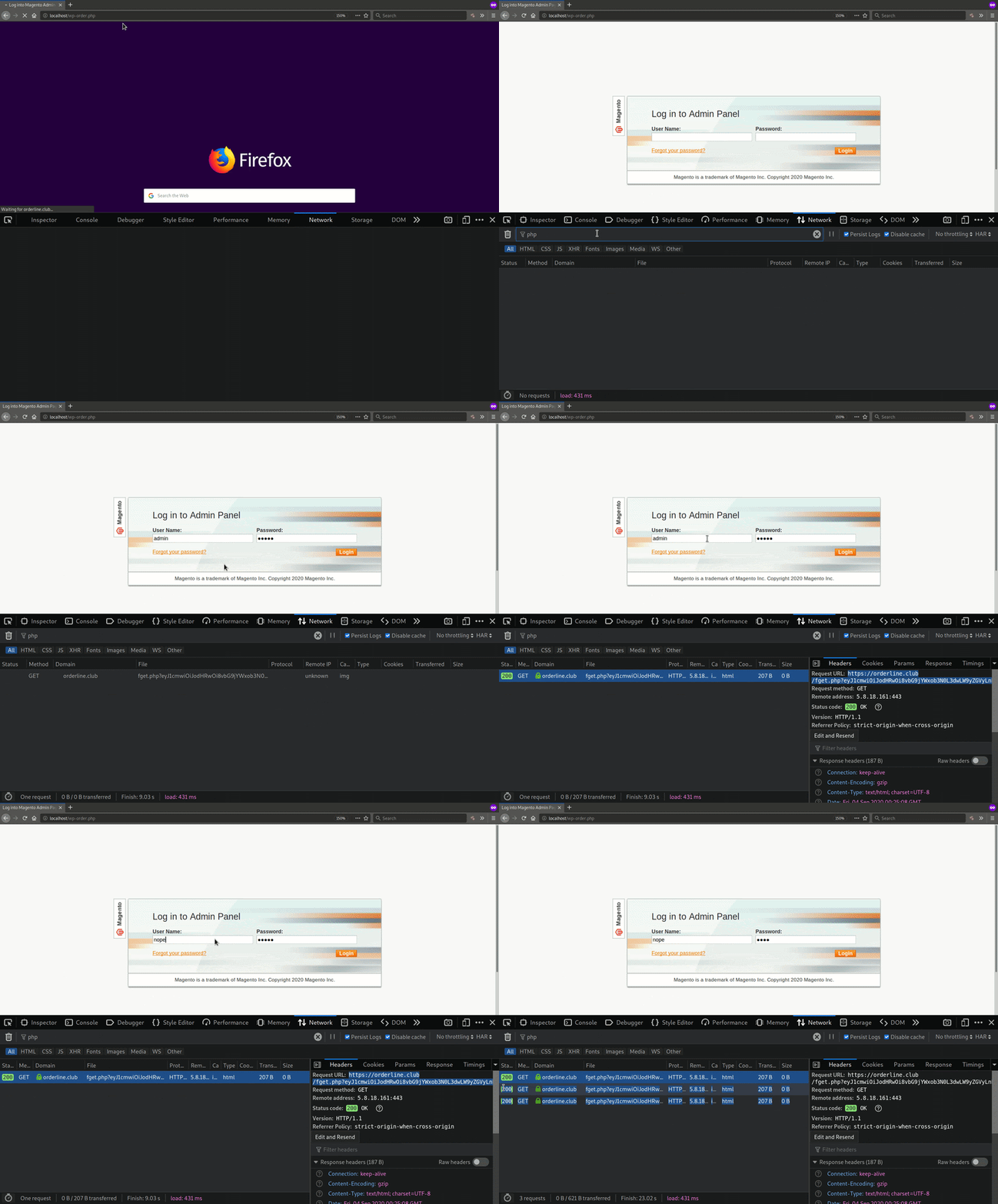
A GIF illustrating the GET request after someone enters in their username and password. (Source: Sucuri)

Over the course of its analysis, Sucuri found evidence that the phishing page was still in development. Its researchers concluded that they the security community could therefore see additional phishing campaigns incorporate this type of JavaScript-based exfiltration technique in the future.

News of this attack highlights the need for organizations to defend themselves against phishing attacks. They can do so by educating their employees about some of the most common types of phishing attacks that are in circulation today. This resource is a good place to start.

The post ” JavaScript Used by Phishing Page to Steal Magento Credentials” appeared first on TripWire

Source:TripWire – David Bisson

Tags: Encryption, Phishing, TripWire

Continue Reading

Previous Police Raided German Spyware Company FinFisher Offices
Next UAE’s Information Assurance Regulation – How to Achieve Compliance

More Stories

  • Critical Vulnerability
  • Cyber Attacks
  • Data Breach
  • Malware
  • Vulnerabilities

Asian State-Backed Group TGR-STA-1030 Breaches 70 Government, Infrastructure Entities

1 hour ago [email protected] (The Hacker News)
  • Cyber Attacks
  • Data Breach

How Samsung Knox Helps Stop Your Network Security Breach

3 hours ago [email protected] (The Hacker News)
  • Cyber Attacks
  • Data Breach
  • Malware
  • Vulnerabilities

Compromised dYdX npm and PyPI Packages Deliver Wallet Stealers and RAT Malware

5 hours ago [email protected] (The Hacker News)
  • Critical Vulnerability
  • Data Breach
  • Vulnerabilities

Claude Opus 4.6 Finds 500+ High-Severity Flaws Across Major Open-Source Libraries

8 hours ago [email protected] (The Hacker News)
  • Cyber Attacks
  • Data Breach

AISURU/Kimwolf Botnet Launches Record-Setting 31.4 Tbps DDoS Attack

20 hours ago [email protected] (The Hacker News)
  • Critical Vulnerability
  • Cyber Attacks
  • Data Breach
  • Malware
  • Vulnerabilities

ThreatsDay Bulletin: Codespaces RCE, AsyncRAT C2, BYOVD Abuse, AI Cloud Intrusions & 15+ Stories

1 day ago [email protected] (The Hacker News)

Recent Posts

  • Asian State-Backed Group TGR-STA-1030 Breaches 70 Government, Infrastructure Entities
  • How Samsung Knox Helps Stop Your Network Security Breach
  • Compromised dYdX npm and PyPI Packages Deliver Wallet Stealers and RAT Malware
  • Claude Opus 4.6 Finds 500+ High-Severity Flaws Across Major Open-Source Libraries
  • AISURU/Kimwolf Botnet Launches Record-Setting 31.4 Tbps DDoS Attack

Tags

Android APT Bug CERT Cloud Compliance Coronavirus COVID-19 Critical Severity Encryption Exploit Facebook Finance Google Google Chrome Goverment Hacker Hacker News High Severity Instagram iPhone Java Linux Low Severity Malware Medium Severity Microsoft Moderate Severity Mozzila Firefox Oracle Patch Tuesday Phishing Privacy QuickHeal Ransomware RAT Sim The Hacker News Threatpost TikTok TripWire VMWARE Vulnerability Whatsapp Zoom
Copyright © 2020 All rights reserved | NGTEdu.com
This website uses cookies to improve your experience. We'll assume you're ok with this, but you can opt-out if you wish. Read More here.Cookie settingsACCEPT
Privacy & Cookies Policy

Privacy Overview

This website uses cookies to improve your experience while you navigate through the website. Out of these cookies, the cookies that are categorized as necessary are stored on your browser as they are essential for the working of basic functionalities of the website. We also use third-party cookies that help us analyze and understand how you use this website. These cookies will be stored in your browser only with your consent. You also have the option to opt-out of these cookies. But opting out of some of these cookies may have an effect on your browsing experience.
Necessary
Always Enabled
Necessary cookies are absolutely essential for the website to function properly. This category only includes cookies that ensures basic functionalities and security features of the website. These cookies do not store any personal information.
Non-necessary
Any cookies that may not be particularly necessary for the website to function and is used specifically to collect user personal data via analytics, ads, other embedded contents are termed as non-necessary cookies. It is mandatory to procure user consent prior to running these cookies on your website.
SAVE & ACCEPT