
Skip to content
NGTEdu Logo

NGTEdu

A PRODUCT OF NGTECH.CO.IN

NGTEdu Logo

NGTEdu

  • Home
  • Cyber Attacks
  • Malware
  • Vulnerabilities
  • Data Breach
  • Home
  • Cyber Attacks
  • FBI and CISA warn that cybercriminals don’t take holidays
  • Critical Vulnerability
  • Cyber Attacks
  • Data Breach
  • Malware

FBI and CISA warn that cybercriminals don’t take holidays
4 years ago Graham Cluley
FBI and CISA warn that cybercriminals don’t take holidays

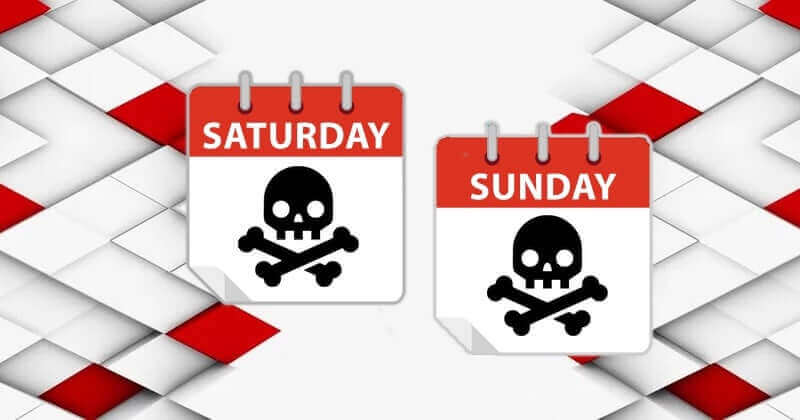
The FBI and CISA (the Cybersecurity and Infrastructure Security Agency) have jointly issued an advisory to organisations, warning about an increase in the number of attacks coinciding with weekends and holidays.

With the Labor Day weekend rapidly approaching, the agencies have reminded businesses to be especially vigilant, remain diligent about their network defences, and “engage in preemptive threat hunting on their networks to search for signs of threat actors.”

To underline their point, the FBI and CISA have warned that they have noted a trend for ransomware and other cyber attacks to occur at times when offices are normally closed. To underline the seriousness of the issue, the agencies have detailed three major ransomware attacks in recent months that coincided with holiday weekends, causing significant disruption:

In May 2021, leading into Mother’s Day weekend, malicious cyber actors deployed DarkSide ransomware against the IT network of a US-based critical infrastructure entity in the Energy Sector, resulting in a week-long suspension of operations. After DarkSide actors gained access to the victim’s network, they deployed ransomware to encrypt victim data and — as a secondary form of extortion — exfiltrated the data before threatening to publish it to further pressure victims into paying the ransom demand. In May 2021, over the Memorial Day weekend, a critical infrastructure entity in the Food and Agricultural Sector suffered a Sodinokibi/REvil ransomware attack affecting US and Australian meat production facilities, resulting in a complete production stoppage. In July 2021, during the Fourth of July holiday weekend, Sodinokibi/REvil ransomware actors attacked a US-based critical infrastructure entity in the IT Sector and implementations of their remote monitoring and management tool, affecting hundreds of organizations — including multiple managed service providers and their customers.

The high-profile cases highlighted by the FBI and CISA emphasise an important principle of cybersecurity – malicious hackers don’t take holidays.

A cyber attack could be launched against your organisation at any time of day or night, on any day of the year. And if an attacker has a choice between hitting your business when its IT security department is present and fully-staffed and when it isn’t – well, which one do they think they will choose?

Time and time again we see cybercriminals strike at weekends or on the eve of a major holiday – knowing that for many organisations it is likely to take them longer to respond and limit the damage caused.

CISA and the FBI may not have definite evidence that attacks are planned to coincide with the Labor Day weekend, but we would be fooling ourselves if we believed that hacking gangs weren’t very aware that many organisations will be operating a slimmed-down security team over this and other holidays.

As Tripwire VP Tim Erlin adroitly puts it, “Attackers don’t take the weekends off, and neither should your cybersecurity.“

Take measures now to reduce the chances of a successful ransomware attack against your company. Check out these 30 ransomware prevention tips to harden your business’s defences, all year round.


Editor’s Note: The opinions expressed in this guest author article are solely those of the contributor, and do not necessarily reflect those of Tripwire, Inc.

The post ” FBI and CISA warn that cybercriminals don’t take holidays” appeared first on TripWire

Source:TripWire – Graham Cluley

Tags: CERT, Critical Severity, Goverment, High Severity, Malware, Ransomware, TripWire

Continue Reading

Previous 7 Ways to Defend Mobile Apps, APIs from Cyberattacks
Next Cisco Patches Critical Authentication Bug With Public Exploit

More Stories

  • Critical Vulnerability
  • Cyber Attacks
  • Data Breach
  • Malware
  • Vulnerabilities

China-Linked DKnife AitM Framework Targets Routers for Traffic Hijacking, Malware Delivery

5 hours ago [email protected] (The Hacker News)
  • Cyber Attacks
  • Data Breach
  • Vulnerabilities

CISA Orders Removal of Unsupported Edge Devices to Reduce Federal Network Risk

6 hours ago [email protected] (The Hacker News)
  • Critical Vulnerability
  • Cyber Attacks
  • Data Breach
  • Malware
  • Vulnerabilities

Asian State-Backed Group TGR-STA-1030 Breaches 70 Government, Infrastructure Entities

8 hours ago [email protected] (The Hacker News)
  • Cyber Attacks
  • Data Breach

How Samsung Knox Helps Stop Your Network Security Breach

9 hours ago [email protected] (The Hacker News)
  • Cyber Attacks
  • Data Breach
  • Malware
  • Vulnerabilities

Compromised dYdX npm and PyPI Packages Deliver Wallet Stealers and RAT Malware

11 hours ago [email protected] (The Hacker News)
  • Critical Vulnerability
  • Data Breach
  • Vulnerabilities

Claude Opus 4.6 Finds 500+ High-Severity Flaws Across Major Open-Source Libraries

14 hours ago [email protected] (The Hacker News)

Recent Posts

  • China-Linked DKnife AitM Framework Targets Routers for Traffic Hijacking, Malware Delivery
  • CISA Orders Removal of Unsupported Edge Devices to Reduce Federal Network Risk
  • Asian State-Backed Group TGR-STA-1030 Breaches 70 Government, Infrastructure Entities
  • How Samsung Knox Helps Stop Your Network Security Breach
  • Compromised dYdX npm and PyPI Packages Deliver Wallet Stealers and RAT Malware

Tags

Android APT Bug CERT Cloud Compliance Coronavirus COVID-19 Critical Severity Encryption Exploit Facebook Finance Google Google Chrome Goverment Hacker Hacker News High Severity Instagram iPhone Java Linux Low Severity Malware Medium Severity Microsoft Moderate Severity Mozzila Firefox Oracle Patch Tuesday Phishing Privacy QuickHeal Ransomware RAT Sim The Hacker News Threatpost TikTok TripWire VMWARE Vulnerability Whatsapp Zoom
Copyright © 2020 All rights reserved | NGTEdu.com
This website uses cookies to improve your experience. We'll assume you're ok with this, but you can opt-out if you wish. Read More here.Cookie settingsACCEPT
Privacy & Cookies Policy

Privacy Overview

This website uses cookies to improve your experience while you navigate through the website. Out of these cookies, the cookies that are categorized as necessary are stored on your browser as they are essential for the working of basic functionalities of the website. We also use third-party cookies that help us analyze and understand how you use this website. These cookies will be stored in your browser only with your consent. You also have the option to opt-out of these cookies. But opting out of some of these cookies may have an effect on your browsing experience.
Necessary
Always Enabled
Necessary cookies are absolutely essential for the website to function properly. This category only includes cookies that ensures basic functionalities and security features of the website. These cookies do not store any personal information.
Non-necessary
Any cookies that may not be particularly necessary for the website to function and is used specifically to collect user personal data via analytics, ads, other embedded contents are termed as non-necessary cookies. It is mandatory to procure user consent prior to running these cookies on your website.
SAVE & ACCEPT