
Skip to content
NGTEdu Logo

NGTEdu

A PRODUCT OF NGTECH.CO.IN

NGTEdu Logo

NGTEdu

  • Home
  • Cyber Attacks
  • Malware
  • Vulnerabilities
  • Data Breach
  • Home
  • Cyber Attacks
  • Eight men arrested following celebrity SIM-swapping attacks
  • Cyber Attacks
  • Data Breach
  • Vulnerabilities

Eight men arrested following celebrity SIM-swapping attacks
5 years ago Graham Cluley
Eight men arrested following celebrity SIM-swapping attacks

British police have arrested eight men in connection with a series of SIM-swapping attacks which saw criminals hijack the social media accounts of well-known figures and their families.

The UK’s National Crime Agency (NCA) says it made arrests in England and Scotland as part of an international investigation working alongside the FBI, US Secret Service, Homeland Security Investigations, and the Santa Clara California District Attorney’s Office.

According to the NCA, the probe uncovered a network of UK-based criminals who seized control of victims’ phone numbers, and then broke into online accounts – with the intention of stealing money, cryptocurrency, and the contents of their address books.

The social media accounts of well-known influencers, musicians, sports stars, and their families were also hijacked by the attackers, who would change account passwords to lock out the legitimate owners.

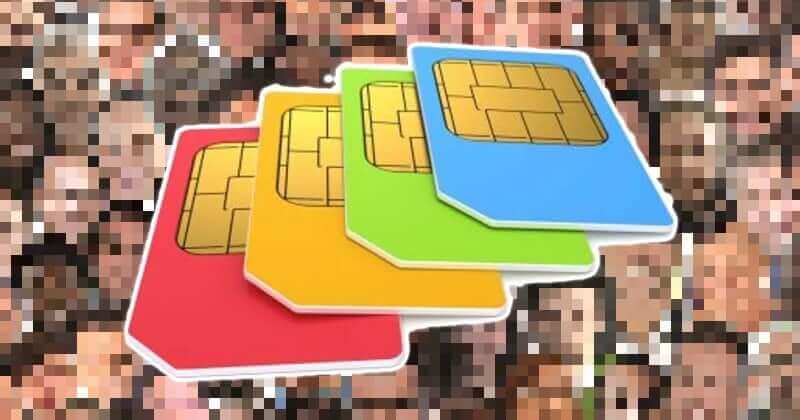
Central to the attack was a SIM-swapping attack. These commonly occur when fraudsters manage to dupe customer support staff at a cellphone operator into giving them control of someone else’s phone number, or actually having a rogue insider working for them inside a cellphone company.

The consequence is that a criminal fraudster will now not only be receiving phone calls intended for their victim. They will also be receiving SMS messages – which may include the tokens used by some online services to authenticate a user logging into a system is who they say they are.

The NCA explained what that meant for account security:

“After gaining control of the phone number, they use the ‘change password’ function on apps, which leads to them receiving reset codes sent via SMS (or to subsequently compromised email accounts) to reset passwords.” “After changing the passwords, the victim is denied access and the criminals have free reign over their contacts, banking apps, emails and social media accounts.”

According to the NCA, the gang stole “large sums from their victims, from either their bank accounts or bitcoin wallets.”

SIM swap attacks have become more common in recent years, and as a result there has been a concerted effort by many to push for more secure methods of authentication than a token sent via SMS.

Just a few months ago, for instance, Microsoft urged users to stop using telephone voice messages and SMS text messages for multi-factor authentication and switch to authentication apps or hardware keys instead.

There’s also a need for those online services which still only offer SMS-based authentication to switch to superior and more secure methods. Back in 2019, the FBI warned about the dangers of SIM-swapping attacks to banks and others, advising the use of stronger forms of multi-factor authentication that were less easy to exploit.

The men arrested by the National Crime Agency are suspected to be members of the criminal group, and are all aged between 18-26 years old. They face prosecution for offences under the Computer Misuse Act, as well as fraud and money laundering. In addition they face the possibility of being extradited to the United States for further prosecution.


Editor’s Note: The opinions expressed in this guest author article are solely those of the contributor, and do not necessarily reflect those of Tripwire, Inc.

The post ” Eight men arrested following celebrity SIM-swapping attacks” appeared first on TripWire

Source:TripWire – Graham Cluley

Tags: Exploit, Finance, Goverment, Microsoft, Sim, TripWire

Continue Reading

Previous Military, Nuclear Entities Under Target By Novel Android Malware
Next Various Malware Lurks in Discord App to Target Gamers

More Stories

  • Cyber Attacks
  • Data Breach
  • Malware
  • Vulnerabilities

Researchers Find 341 Malicious ClawHub Skills Stealing Data from OpenClaw Users

3 hours ago [email protected] (The Hacker News)
  • Cyber Attacks
  • Data Breach
  • Vulnerabilities

OpenClaw Bug Enables One-Click Remote Code Execution via Malicious Link

4 hours ago [email protected] (The Hacker News)
  • Cyber Attacks
  • Data Breach

Microsoft Begins NTLM Phase-Out With Three-Stage Plan to Move Windows to Kerberos

5 hours ago [email protected] (The Hacker News)
  • Critical Vulnerability
  • Cyber Attacks
  • Data Breach
  • Malware
  • Vulnerabilities

⚡ Weekly Recap: Proxy Botnet, Office Zero-Day, MongoDB Ransoms, AI Hijacks & New Threats

9 hours ago [email protected] (The Hacker News)
  • Critical Vulnerability
  • Cyber Attacks
  • Data Breach

Securing the Mid-Market Across the Complete Threat Lifecycle

9 hours ago [email protected] (The Hacker News)
  • Cyber Attacks
  • Data Breach
  • Malware
  • Vulnerabilities

Notepad++ Official Update Mechanism Hijacked to Deliver Malware to Select Users

12 hours ago [email protected] (The Hacker News)

Recent Posts

  • Researchers Find 341 Malicious ClawHub Skills Stealing Data from OpenClaw Users
  • OpenClaw Bug Enables One-Click Remote Code Execution via Malicious Link
  • Microsoft Begins NTLM Phase-Out With Three-Stage Plan to Move Windows to Kerberos
  • ⚡ Weekly Recap: Proxy Botnet, Office Zero-Day, MongoDB Ransoms, AI Hijacks & New Threats
  • Securing the Mid-Market Across the Complete Threat Lifecycle

Tags

Android APT Bug CERT Cloud Compliance Coronavirus COVID-19 Critical Severity Encryption Exploit Facebook Finance Google Google Chrome Goverment Hacker Hacker News High Severity Instagram iPhone Java Linux Low Severity Malware Medium Severity Microsoft Moderate Severity Mozzila Firefox Oracle Patch Tuesday Phishing Privacy QuickHeal Ransomware RAT Sim The Hacker News Threatpost TikTok TripWire VMWARE Vulnerability Whatsapp Zoom
Copyright © 2020 All rights reserved | NGTEdu.com
This website uses cookies to improve your experience. We'll assume you're ok with this, but you can opt-out if you wish. Read More here.Cookie settingsACCEPT
Privacy & Cookies Policy

Privacy Overview

This website uses cookies to improve your experience while you navigate through the website. Out of these cookies, the cookies that are categorized as necessary are stored on your browser as they are essential for the working of basic functionalities of the website. We also use third-party cookies that help us analyze and understand how you use this website. These cookies will be stored in your browser only with your consent. You also have the option to opt-out of these cookies. But opting out of some of these cookies may have an effect on your browsing experience.
Necessary
Always Enabled
Necessary cookies are absolutely essential for the website to function properly. This category only includes cookies that ensures basic functionalities and security features of the website. These cookies do not store any personal information.
Non-necessary
Any cookies that may not be particularly necessary for the website to function and is used specifically to collect user personal data via analytics, ads, other embedded contents are termed as non-necessary cookies. It is mandatory to procure user consent prior to running these cookies on your website.
SAVE & ACCEPT