
Skip to content
NGTEdu Logo

NGTEdu

A PRODUCT OF NGTECH.CO.IN

NGTEdu Logo

NGTEdu

  • Home
  • Cyber Attacks
  • Malware
  • Vulnerabilities
  • Data Breach
  • Home
  • Cyber Attacks
  • Capcom hacked. Resident Evil game developer discloses cyber attack
  • Cyber Attacks
  • Data Breach
  • Malware

Capcom hacked. Resident Evil game developer discloses cyber attack

5 years ago Graham Cluley
Capcom hacked. Resident Evil game developer discloses cyber attack

Japanese game developer Capcom has revealed that it suffered a security breach earlier this week which saw malicious hackers access its internal systems.

The maker of such well-known video games as “Resident Evil” and “Street Fighter” disclosed in a short press release that in the early hours of Monday some of its networks “experienced issues” that affected access to email and file servers.

In response, the company has shut down some of its systems. However, in what must be a big relief to fans of Capcom video games, the attack is said not to have affected players’ online access to the firm’s video games and websites.

But might whoever managed to hack their way into Capcom’s network have accessed any sensitive data, such as customer details?

At the moment the company’s official statement says that “at present there is no indication that any customer information was breached.”

Of course, as security commentators love to point out, an absence of evidence is not an evidence of absence. If you have ever shared sensitive information with Capcom you might be wise to assume that those details might now be in the hands of cybercriminals, and – as ever – be cautious about unsolicited emails and other attacks that often occur following a data breach.

And even if no customer information has been stolen from Capcom’s internal servers and email accounts, there might have been other sensitive data stolen – such as intellectual property from the video game developer, or details of the firm’s plans for future video game releases.

There is some reason to be concerned that a data breach might have happened.

Just last month, ZDNet reported that two other video game companies, Ubisoft and Crytek, appeared to have suffered a security breach that saw stolen files posted on the dark web.

Those breaches appear to have been the work of a ransomware gang calling itself Egregor, whose malware is said to be closely related to another family of ransomware known as Sekhmet. Researchers at Malwarebytes have warned that cybercriminals who were previously making use of the Maze ransomware (which recently retired from active service) have shifted towards Egregor.

For now, however, it is unclear what precisely may have happened at Ubisoft and Crytek, and whether the firms’ data was encrypted by the ransomware like Egregor or just stolen.
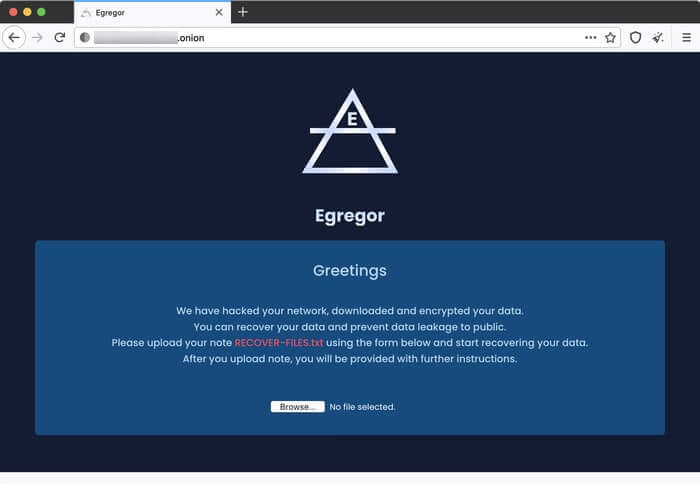
If Capcom has been hit by the Egregor ransomware, then chances are that they will have been directed to a darknet website operated by the hackers, demanding a cryptocurrency payment in exchange for a decryption key and the promise that stolen data will not be leaked publicly.

In its press release, Capcom expresses “its deepest regret for any inconvenience” that may have been caused by the hack and its aftermath. The firm says that it has informed the computer crime authorities about the incident, and is working to restore its systems.

Presently it is unclear how long it will take Capcom to return to its normal operations.


Editor’s Note: The opinions expressed in this guest author article are solely those of the contributor, and do not necessarily reflect those of Tripwire, Inc.

The post ” Capcom hacked. Resident Evil game developer discloses cyber attack” appeared first on TripWire

Source:TripWire – Graham Cluley

Tags: Encryption, Malware, Ransomware, TripWire

Continue Reading

Previous Premium-Rate Phone Fraudsters Hack VoIP Servers of 1200 Companies
Next Email Attacks Using Fear of Election Interference to Spread QBot

More Stories

  • Critical Vulnerability
  • Cyber Attacks
  • Data Breach
  • Malware
  • Vulnerabilities

OpenClaw Integrates VirusTotal Scanning to Detect Malicious ClawHub Skills

54 mins ago [email protected] (The Hacker News)
  • Cyber Attacks
  • Data Breach
  • Malware
  • Vulnerabilities

German Agencies Warn of Signal Phishing Targeting Politicians, Military, Journalists

21 hours ago [email protected] (The Hacker News)
  • Critical Vulnerability
  • Cyber Attacks
  • Data Breach
  • Malware
  • Vulnerabilities

China-Linked DKnife AitM Framework Targets Routers for Traffic Hijacking, Malware Delivery

2 days ago [email protected] (The Hacker News)
  • Cyber Attacks
  • Data Breach
  • Vulnerabilities

CISA Orders Removal of Unsupported Edge Devices to Reduce Federal Network Risk

2 days ago [email protected] (The Hacker News)
  • Critical Vulnerability
  • Cyber Attacks
  • Data Breach
  • Malware
  • Vulnerabilities

Asian State-Backed Group TGR-STA-1030 Breaches 70 Government, Infrastructure Entities

2 days ago [email protected] (The Hacker News)
  • Cyber Attacks
  • Data Breach

How Samsung Knox Helps Stop Your Network Security Breach

2 days ago [email protected] (The Hacker News)

Recent Posts

  • OpenClaw Integrates VirusTotal Scanning to Detect Malicious ClawHub Skills
  • German Agencies Warn of Signal Phishing Targeting Politicians, Military, Journalists
  • China-Linked DKnife AitM Framework Targets Routers for Traffic Hijacking, Malware Delivery
  • CISA Orders Removal of Unsupported Edge Devices to Reduce Federal Network Risk
  • Asian State-Backed Group TGR-STA-1030 Breaches 70 Government, Infrastructure Entities

Tags

Android APT Bug CERT Cloud Compliance Coronavirus COVID-19 Critical Severity Encryption Exploit Facebook Finance Google Google Chrome Goverment Hacker Hacker News High Severity Instagram iPhone Java Linux Low Severity Malware Medium Severity Microsoft Moderate Severity Mozzila Firefox Oracle Patch Tuesday Phishing Privacy QuickHeal Ransomware RAT Sim The Hacker News Threatpost TikTok TripWire VMWARE Vulnerability Whatsapp Zoom
Copyright © 2020 All rights reserved | NGTEdu.com
This website uses cookies to improve your experience. We'll assume you're ok with this, but you can opt-out if you wish. Read More here.Cookie settingsACCEPT
Privacy & Cookies Policy

Privacy Overview

This website uses cookies to improve your experience while you navigate through the website. Out of these cookies, the cookies that are categorized as necessary are stored on your browser as they are essential for the working of basic functionalities of the website. We also use third-party cookies that help us analyze and understand how you use this website. These cookies will be stored in your browser only with your consent. You also have the option to opt-out of these cookies. But opting out of some of these cookies may have an effect on your browsing experience.
Necessary
Always Enabled
Necessary cookies are absolutely essential for the website to function properly. This category only includes cookies that ensures basic functionalities and security features of the website. These cookies do not store any personal information.
Non-necessary
Any cookies that may not be particularly necessary for the website to function and is used specifically to collect user personal data via analytics, ads, other embedded contents are termed as non-necessary cookies. It is mandatory to procure user consent prior to running these cookies on your website.
SAVE & ACCEPT