
Skip to content
NGTEdu Logo

NGTEdu

A PRODUCT OF NGTECH.CO.IN

NGTEdu Logo

NGTEdu

  • Home
  • Cyber Attacks
  • Malware
  • Vulnerabilities
  • Data Breach
  • Home
  • Cyber Attacks
  • Newly-discovered KryptoCibule malware has been stealing and mining cryptocurrency since 2018
  • Cyber Attacks
  • Data Breach
  • Malware

Newly-discovered KryptoCibule malware has been stealing and mining cryptocurrency since 2018

5 years ago Graham Cluley
Newly-discovered KryptoCibule malware has been stealing and mining cryptocurrency since 2018

Security researchers at Slovak security firm ESET have discovered a new family of malware that they say has been using a variety of techniques to steal cryptocurrency from unsuspecting users since at least December 2018.

The malware, which has been named KryptoCibule, uses a variety of legitimate technology – including Tor and the Transmission torrent client – as part of its scheme to mine cryptocurrency, divert digital currency transactions into its creators’ own accounts, and plant a backdoor for hackers to remotely access infected systems.

KryptoCibule poses a three-pronged threat when it comes to cryptocurrency.

Firstly, it exploits the CPU and GPU of infected computers to mine for Monero and Ethereum. In an attempt to avoid detection by the legitimate user of the computer, KryptoCibule monitors the battery level of infected devices and will not do any mining if the battery is at less than 10% capacity.

If the battery level status is between 10% and 30%, however, Ethereum-mining via the GPU is suspended and only Monero-mining via the CPU takes place, albeit limited to one thread.

However, if the battery level is 30% or more and there has been no user activity for the last three minutes, “both the GPU and CPU miners are run without limits.”

In this way, KryptoCibule attempts to surreptitiously mine cryptocurrency on infected PCs without users detecting anything suspicious.

Secondly, the KryptoCibule malware monitors the user’s clipboard. If it detects that a legitimate cryptocurrency wallet address has been placed in the clipboard it silently replaces it with one of its own – meaning that users might unwittingly be transfer funds directly into the hackers’ own digital pockets.

Thirdly, the malware scouts drives attached to an infected computer, hunting for files which might contain content of interest – such as passwords and private keys.

And if this wasn’t bad enough, KryptoCibule’s RAT (Remote Access Trojan) component allows attackers to run commands on victims’ PCs via a backdoor, and install additional malicious code.

According to ESET’s research, KryptoCibule has been distributed via malicious torrents posing as pirated versions of popular games and other software on uloz.to; a popular file-sharing site in Czechia and Slovakia.
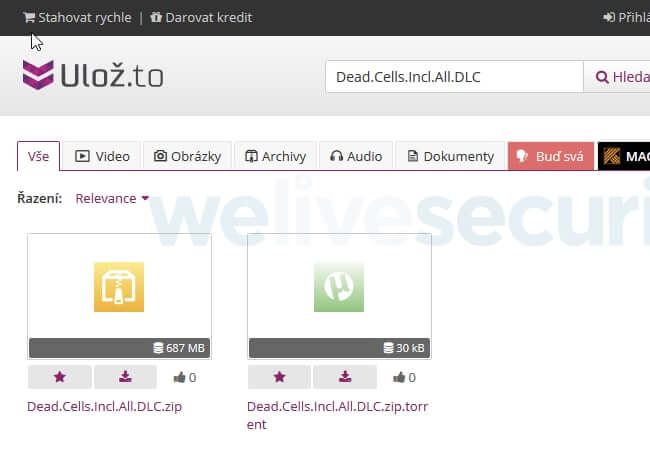
To disguise its behaviour, users who download the torrents and execute the installer do not realise that malicious code is being run in the background.

The link to Czechia and Slovakia is reinforced when it comes to the malware’s methods to avoid detection. If KryptoCibule detects that it is being installed on PCs running Avast, AVG, and ESET (all security products with head offices based in the two countries) it deliberately does not deploy its cryptocurrency-mining code, helping it to avoid attention.

To date, perhaps because of its geographic focus and desire to remain in the shadows, KryptoCibule does not appear to have infected a large number of computers. ESET believes that victims may number in the hundreds rather than thousands. However, it has remained active in the wild since at least late 2018, and has been regularly updated with new capabilities.

While threats like KryptoCibule continue to be actively developed we would be unwise to underestimate them.


Editor’s Note: The opinions expressed in this guest author article are solely those of the contributor, and do not necessarily reflect those of Tripwire, Inc.

The post ” Newly-discovered KryptoCibule malware has been stealing and mining cryptocurrency since 2018″ appeared first on TripWire

Source:TripWire – Graham Cluley

Tags: Encryption, Malware, RAT, TripWire

Continue Reading

Previous Google Ups Bug Bounty Reward Amounts for Product Abuse Risks
Next India Blocks High-Profile Chinese Apps on Political, Privacy Concerns

More Stories

  • Cyber Attacks
  • Data Breach
  • Malware
  • Vulnerabilities

Notepad++ Official Update Mechanism Hijacked to Deliver Malware to Select Users

2 hours ago [email protected] (The Hacker News)
  • Critical Vulnerability
  • Cyber Attacks
  • Data Breach
  • Malware
  • Vulnerabilities

eScan Antivirus Update Servers Compromised to Deliver Multi-Stage Malware

5 hours ago [email protected] (The Hacker News)
  • Cyber Attacks
  • Data Breach
  • Malware
  • Vulnerabilities

Open VSX Supply Chain Attack Used Compromised Dev Account to Spread GlassWorm

6 hours ago [email protected] (The Hacker News)
  • Cyber Attacks
  • Data Breach
  • Malware
  • Vulnerabilities

Iran-Linked RedKitten Cyber Campaign Targets Human Rights NGOs and Activists

2 days ago [email protected] (The Hacker News)
  • Cyber Attacks
  • Data Breach
  • Malware
  • Vulnerabilities

Mandiant Finds ShinyHunters-Style Vishing Attacks Stealing MFA to Breach SaaS Platforms

2 days ago [email protected] (The Hacker News)
  • Cyber Attacks
  • Data Breach
  • Malware

CERT Polska Details Coordinated Cyber Attacks on 30+ Wind and Solar Farms

2 days ago [email protected] (The Hacker News)

Recent Posts

  • Notepad++ Official Update Mechanism Hijacked to Deliver Malware to Select Users
  • eScan Antivirus Update Servers Compromised to Deliver Multi-Stage Malware
  • Open VSX Supply Chain Attack Used Compromised Dev Account to Spread GlassWorm
  • Iran-Linked RedKitten Cyber Campaign Targets Human Rights NGOs and Activists
  • Mandiant Finds ShinyHunters-Style Vishing Attacks Stealing MFA to Breach SaaS Platforms

Tags

Android APT Bug CERT Cloud Compliance Coronavirus COVID-19 Critical Severity Encryption Exploit Facebook Finance Google Google Chrome Goverment Hacker Hacker News High Severity Instagram iPhone Java Linux Low Severity Malware Medium Severity Microsoft Moderate Severity Mozzila Firefox Oracle Patch Tuesday Phishing Privacy QuickHeal Ransomware RAT Sim The Hacker News Threatpost TikTok TripWire VMWARE Vulnerability Whatsapp Zoom
Copyright © 2020 All rights reserved | NGTEdu.com
This website uses cookies to improve your experience. We'll assume you're ok with this, but you can opt-out if you wish. Read More here.Cookie settingsACCEPT
Privacy & Cookies Policy

Privacy Overview

This website uses cookies to improve your experience while you navigate through the website. Out of these cookies, the cookies that are categorized as necessary are stored on your browser as they are essential for the working of basic functionalities of the website. We also use third-party cookies that help us analyze and understand how you use this website. These cookies will be stored in your browser only with your consent. You also have the option to opt-out of these cookies. But opting out of some of these cookies may have an effect on your browsing experience.
Necessary
Always Enabled
Necessary cookies are absolutely essential for the website to function properly. This category only includes cookies that ensures basic functionalities and security features of the website. These cookies do not store any personal information.
Non-necessary
Any cookies that may not be particularly necessary for the website to function and is used specifically to collect user personal data via analytics, ads, other embedded contents are termed as non-necessary cookies. It is mandatory to procure user consent prior to running these cookies on your website.
SAVE & ACCEPT