
Manual Processes Are Putting National Security at Risk
Why automating sensitive data transfers is now a mission-critical priority
More than half of national security organizations still rely on manual processes to transfer sensitive data, according to The CYBER360: Defending the Digital Battlespace report. This should alarm every defense and government leader because manual handling of sensitive data is not just inefficient, it is a systemic vulnerability.
Recent breaches in defense supply chains show how manual processes create exploitable gaps that adversaries can weaponize. This is not just a technical issue. It is a strategic challenge for every organization operating in contested domains, where speed and certainty define mission success.
In an era defined by accelerating cyber threats and geopolitical tension, every second counts. Delays, errors, and gaps in control can cascade into consequences that compromise mission readiness, decision-making, and operational integrity. This is exactly what manual processes introduce: uncertainty in environments where certainty is non-negotiable. They create bottlenecks and increase the risk of human error. In short, they undermine the very principles of mission assurance: speed, accuracy, and trust.
Adversaries know this. They exploit seams in data movement. Every manual step is a potential breach point. In a contested environment, these vulnerabilities are operational, not theoretical.
Why Manual Persists
If manual processes are so risky, why do they remain? The answer lies in a mix of technical, cultural, and organizational factors.
Legacy systems remain a major barrier. Many defense and government environments still run on infrastructure that predates modern automation capabilities. These systems were never designed for seamless integration with policy engines or encryption frameworks. Replacing them is costly and disruptive, so organizations layer manual steps as a workaround.
Procurement cycles compound the problem. Acquiring new technology in national security contexts is often slow and complex. Approval chains are long, requirements are rigid, and by the time a solution is deployed, the threat landscape has shifted. Leaders often adopt manual processes as a stopgap, but these temporary measures quickly become permanent habits.
Cross-domain complexity adds another layer. Moving data between classification levels requires strict controls. Historically, these controls relied on human judgment to inspect and approve transfers. Automation was seen as too rigid for nuanced decisions. That perception persists even as modern solutions can enforce granular policies without sacrificing flexibility.
Culture plays a role as well. Trust in people runs deep in national security organizations. Manual handling feels tangible and controllable. Leaders and operators believe that human oversight reduces risk, even when evidence shows the opposite. This slows the adoption of automation.
In some cases, operators still print and hand-carry classified files because digital workflows are perceived as too risky. Regulatory inaction compounds this problem. Compliance frameworks often lag behind technology, reinforcing manual habits and slowing modernization efforts.
Finally, there is a fear of disruption. Missions cannot pause for technology transitions. Leaders worry the automation will introduce delays or errors during rollout. They prefer the known imperfections of manual processes to the unknown risks of change.
These factors explain persistence, but they do not justify it. The environment has changed. Threats are faster, more sophisticated, and increasingly opportunistic.
The Risk of Manual Handling
- Human error and variability: Sensitive data transfer should be consistent and precise. Manual steps introduce variance across teams and time. Even highly trained personnel face fatigue and workload pressure. Small errors can cascade into operational delays or unintended disclosures. Fatigue during high-tempo missions amplifies mistakes, and insider risk grows when oversight depends on trust alone.
- Weak enforcement of policy: Automation turns policy into code. Manual handling turns policy into interpretation. Under pressure, exceptions grow, and workarounds become standard practice. Over time, compliance erodes. These gaps slow incident response and undermine accountability during investigations, leaving leaders without timely insights when decisions matter most.
- Audit gaps and accountability risks: Manual movements are hard to track. Evidence is fragmented across emails and ad hoc logs. Investigations take too long. Leaders cannot rely on consistent chain-of-custody records.
- Security blind spots across domains: Sensitive data often moves across classification levels and networks. Manual processes make these transitions opaque. Adversaries exploit seams where enforcement is inconsistent.
- Mission performance drag: Speed is a security control. Manual transfers add handoffs and delays. Decision cycles slow down. People compensate by skipping steps, introducing new risks.
Manual processes are not resilient. They are fragile, and they fail quietly and then fail loudly.
Principles for Secure Automation: The Cybersecurity Trinity
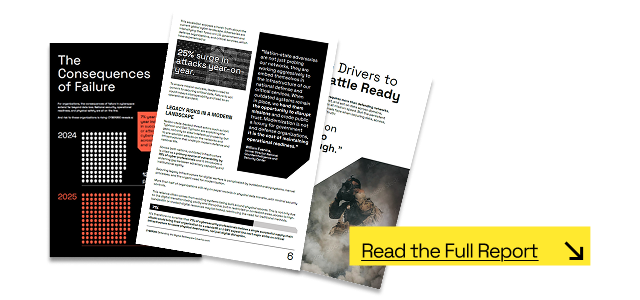
Manual processes are not resilient. They fail quietly and then fail loudly. Eliminating these vulnerabilities requires more than simply automating steps. It demands a security architecture that enforces trust, protects data, and manages boundaries at scale. So, how do defense and government organizations close these gaps and make automation secure? The answer lies in three principles that work together to protect identity, data, and domain boundaries. This is the Cybersecurity Trinity
Automation alone is no longer enough. Modern missions demand a layered approach that addresses identity, data, and domain boundaries. The Cybersecurity Trinity of Zero Trust Architecture (ZTA), Data-Centric Security (DCS), and Cross Domain Solutions (CDS) is now a mission imperative for defense and government organizations.
Zero Trust Architecture (ZTA) ensures that every user, device, and transaction is verified continuously. It eliminates implicit trust and enforces least privilege across all environments. ZTA is the foundation for identity assurance and access control. This reduces insider risk and ensures coalition partners operate under consistent trust models, even in dynamic mission environments.
Data-Centric Security (DCS) shifts the focus from perimeter defense to protecting the data itself. It applies encryption, classification, and policy enforcement wherever the data resides or moves. In sensitive workflows, DCS ensures that even if networks are compromised, the data remains secure. It supports interoperability by applying uniform controls across diverse networks, enabling secure collaboration without slowing operations.
Cross Domain Solutions (CDS) enable controlled, secure transfer of information between classification levels and operational domains. They enforce release authorities, sanitize content, and prevent unauthorized disclosure. CDS is critical for coalition operations, intelligence sharing, and mission agility. These solutions enable secure multinational sharing without introducing delays, which is critical for time-sensitive intelligence exchange.
Together, these three principles form the backbone of secure automation. They close the gaps that manual processes leave open. They make security measurable and mission success sustainable.
Special Considerations for Defense and Government
Sensitive data transfer in national security contexts presents unique challenges. CDS requires automated inspection and enforcement of release authorities. Coalition operations demand federated identity and shared standards to maintain security across organizational boundaries. Tactical systems need lightweight agents and resilient synchronization for low-bandwidth environments. Supply chain exposure must be addressed by extending automation to contractors with strong verification and audit requirements.
In joint missions, delays caused by manual checks can stall intelligence sharing and compromise operational tempo. Automation mitigates these risks by enforcing common standards across partners. Emerging threats such as AI-driven attacks and deepfake data manipulation make manual verification obsolete, increasing the urgency for automated safeguards. Insider risk remains a concern, but automation reduces opportunities for misuse by limiting manual handling and providing detailed audit trails.
The Human Factor
Automation does not eliminate the need for skilled personnel. It changes their focus. People design policies, manage exceptions, and investigate alerts. To make the transition successful, invest in training and culture. Show teams how automation improves mission speed and reduces rework. Communicate clearly and consistently. Celebrate early wins. Create feedback loops where operators can refine workflows. Start with pilot programs in low-risk workflows to build confidence before scaling. Leadership buy-in and clear communication are essential to overcome resistance and accelerate adoption. When automation feels like support rather than surveillance, adoption accelerates.
Conclusion
Manual handling of sensitive data is a strategic liability. It slows missions, creates blind spots, and erodes trust. Automation is not optional; it is mission imperative. Start with high-impact workflows designed by subject matter experts, and in turn, appropriately test the policy into enforceable rules. Integrate identity, encryption, and audit. Measure outcomes, train teams, and fund initiatives that reduce risk.
What should not remain true is that more than half rely on manual today. Your organization does not have to be among them tomorrow. The next conflict will not wait for manual processes to catch up. Leaders must act now to harden data flows, accelerate mission readiness, and ensure that automation becomes a force multiplier rather than a future aspiration.
Source: The CYBER360: Defending the Digital Battlespace.
The post “Manual Processes Are Putting National Security at Risk” appeared first on The Hacker News
Source:The Hacker News – [email protected] (The Hacker News)