
54 EDR Killers Use BYOVD to Exploit 34 Signed Vulnerable Drivers and Disable Security

A new analysis of endpoint detection and response (EDR) killers has revealed that 54 of them leverage a technique known as bring your own vulnerable driver (BYOVD) by abusing a total of 34 vulnerable drivers.
EDR killer programs have been a common presence in ransomware intrusions as they offer a way for affiliates to neutralize security software before deploying file-encrypting malware. This is done so in an attempt to evade detection.
“Ransomware gangs, especially those with ransomware-as-a-service (RaaS) programs, frequently produce new builds of their encryptors, and ensuring that each new build is reliably undetected can be time-consuming,” ESET researcher Jakub Souček said in a report shared with The Hacker News.
“More importantly, encryptors are inherently very noisy (as they inherently need to modify a large number of files in a short period); making such malware undetected is rather challenging.”
EDR killers act as a specialized, external component that’s run to disable security controls before executing the lockers themselves, thereby keeping the latter simple, stable, and easy to rebuild. That’s not to say there have not been instances where EDR termination and ransomware modules have been fused into one single binary. Reynolds ransomware is a case in point.
A majority of the EDR killers rely on legitimate yet vulnerable drivers to gain elevated privileges and achieve their goals. Among the nearly 90 EDR killer tools detected by the Slovakian cybersecurity company, more than half of them utilize the well-known BYOVD tactic simply because it’s reliable.
“The goal of a BYOVD attack is to gain kernel-mode privileges, often called Ring 0,” Bitdefender explains. “At this level, code has unrestricted access to system memory and hardware. Since an attacker cannot load an unsigned malicious driver, they ‘bring’ a driver signed by a reputable vendor (such as a hardware manufacturer or an old antivirus version) that has a known vulnerability.”
Armed with the kernel access, threat actors can terminate EDR processes, disable security tools, tamper with kernel callbacks, and undermine endpoint protections. The result is an abuse of Microsoft’s driver trust model to evade defenses, taking advantage of the fact that the vulnerable driver is legitimate and signed.
The BYOVD-based EDR killers are primarily developed by three types of threat actors –
- Closed ransomware groups like DeadLock and Warlock that do not rely on affiliates
- Attackers forking and tweaking existing proof-of-concept code (e.g., SmilingKiller and TfSysMon-Killer)
- Cybercriminals marketing such tools on underground marketplaces as a service (e.g., DemoKiller aka Бафомет, ABYSSWORKER, and CardSpaceKiller)
ESET said it also identified script-based tools that make use of built-in administrative commands like taskkill, net stop, or sc delete to interfere with the regular functioning of security product processes and services. Select variants have also been found to combine scripting with Windows Safe Mode.
“Since Safe Mode loads only a minimal subset of the operating system, and security solutions typically aren’t included, malware has a higher chance of disabling protection,” the company noted. “At the same time, such activity is very noisy, as it requires a reboot, which is risky and unreliable in unknown environments. Therefore, it is seen only rarely in the wild.”
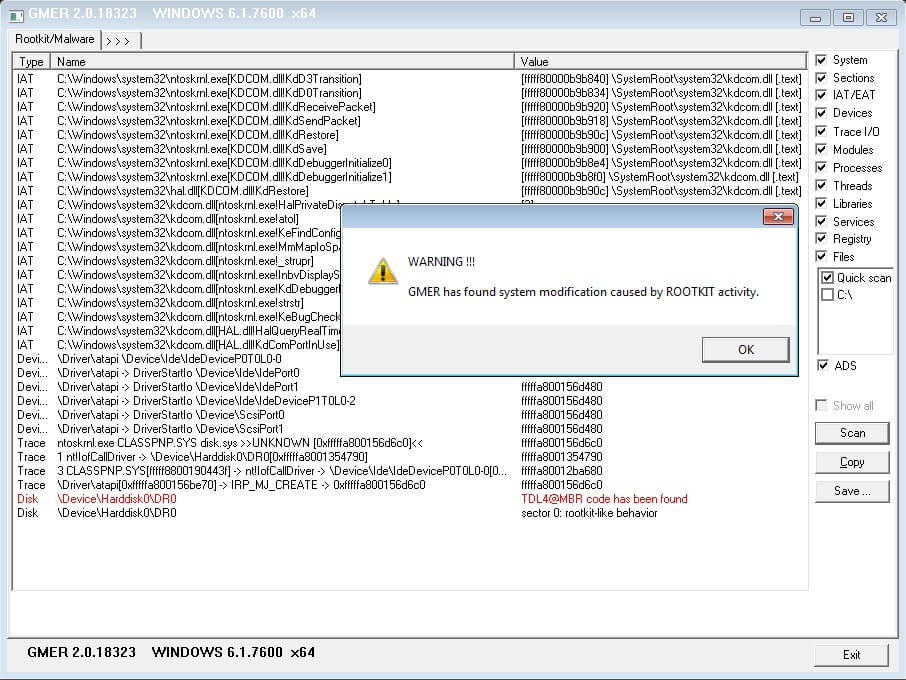
The third category of EDR killers are anti-rootkits, which include legitimate utilities such as GMER, HRSword, and PC Hunter, that offer an intuitive user interface to terminate protected processes or services. A fourth, emerging class is a set of driverless EDR killers like EDRSilencer and EDR-Freeze that block outbound traffic from EDR solutions and cause the programs to enter a “coma” like state.
“Attackers aren’t putting much effort into making their encryptors undetected,” ESET said. “Rather, all the sophisticated defense-evasion techniques have shifted to the user-mode components of EDR killers. This trend is most visible in commercial EDR killers, which often incorporate mature anti-analysis and anti-detection capabilities.”
To combat ransomware and EDR killers, blocking commonly misused drivers from loading is a necessary defense mechanism. However, given that EDR killers are executed only at the last stage and just before launching the encryptor, a failure at this stage means the threat actor can easily switch to another tool to accomplish the same task.
The implication is that organizations need layered defenses and detection strategies in place to proactively monitor, flag, contain, and remediate the threat at each every stage of the attack lifecycle.
“EDR killers endure because they’re cheap, consistent, and decoupled from the encryptor – a perfect fit for both encryptor developers, who don’t need to focus on making their encryptors undetectable, and affiliates, who possess an easy-to-use, powerful utility to disrupt defenses prior to encryption,” ESET said.
The post “54 EDR Killers Use BYOVD to Exploit 34 Signed Vulnerable Drivers and Disable Security” appeared first on The Hacker News
Source:The Hacker News – [email protected] (The Hacker News)